Haj Arafa App
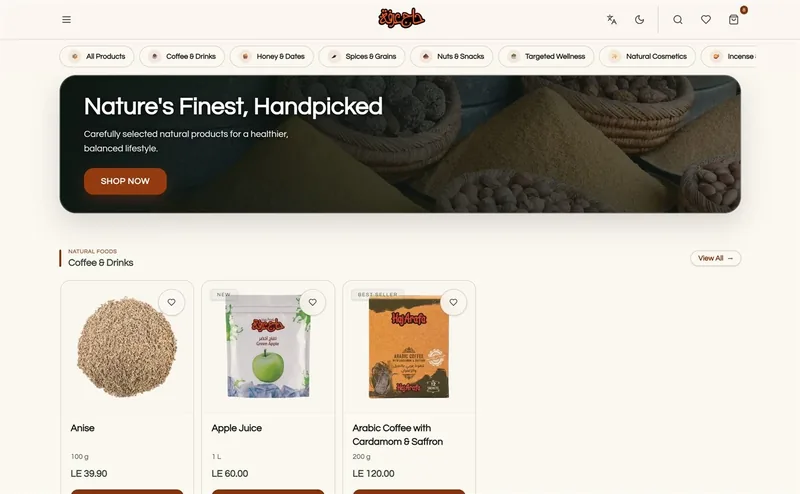
Mobile-first e-commerce interface showcasing search-first navigation and express 2-step checkout.
01 Challenge & Context
The design brief focused on simplifying deeply nested mobile categories and a lengthy checkout flow that required account creation.
The brief called for easier product discovery and a shorter checkout journey. These needs informed the concept; they are not findings from a reported user study.
The brief identified checkout friction as a business risk. Production abandonment and repeat-purchase data were not available for this concept.
Design a mobile-first shopping journey with search-first navigation and a shorter guest checkout.
02 Solution & Execution
Mapped the intended shopping journey and designed search-first navigation, guest checkout, and prominent 44px touch targets informed by relevant WCAG 2.2 criteria.
Consolidated five interface stages into one accordion-based checkout concept with address autofill and a clear cost breakdown.
Trade-off: The accordion reduces checkout-page length but hides later steps, so progress must remain clear and the pattern still needs usability validation.
03 Impact & Learnings
Delivered a live responsive implementation with a shorter, clearer path from product discovery to order confirmation.
The implementation gives search and curated categories prominent positions. Findability remains a question for usability testing.
The proposed checkout shortens the purchase path. Its effect on conversion has not yet been measured.
Built mobile-first with keyboard interaction, visible focus states, and responsive layouts informed by WCAG 2.2.
The live implementation demonstrates the proposed journey. Conversion and abandonment outcomes have not yet been measured and require privacy-conscious production analytics.
Special learning: shaping a concise responsive commerce journey and directing AI agents to implement navigation and checkout states faithfully.